

Do you ever finish a meal, feeling your stomach distended, yet a gnawing emptiness persists? Or perhaps you’ve eaten something seemingly small, like a handful of nuts, and felt surprisingly satisfied? The experience of fullness, or satiety, is more complex than a simple calculation of what you’ve consumed. We often fixate on calorie counts, believing they’re the sole determinant of whether we’ll feel satisfied or still crave more. But our bodies tell a different story, one where the physical volume of food, its texture, and even its psychological impact play crucial roles.
This quest for understanding true satiety is at the heart of conscious eating. It’s about differentiating between physical fullness and mental satisfaction, between stomach stretch and nutrient signals. At Eating the Moment, we guide you away from restrictive diets and toward a deeper awareness of your body’s wisdom, showing you how to truly listen to your hunger and fullness cues. Understanding the interplay between volume and calories is a powerful step in this journey, as we explore in our guide on Chewing and Satiety: The Science of Eating Slowly.
What Exactly Are Calories, Volume, and Satiety?
Before we unravel the dance between volume and calories, let’s establish a clear understanding of these fundamental concepts. A calorie is a unit of energy, a measure of the energy content in food. Our bodies need energy to function, and calories provide that fuel. Volume, in the context of food, refers to the physical amount of space food occupies in our stomach. Think of a large salad versus a small piece of chocolate – vastly different volumes, potentially similar calories. Satiety, then, is the physiological state of feeling full and satisfied after eating, leading to a temporary suppression of hunger and the desire to eat.
These terms are often used interchangeably, or misunderstood as directly proportional, which they are not. Our journey toward mindful eating hinges on discerning these differences and appreciating their individual contributions to our overall eating experience. The body’s intricate systems process both the physical bulk and the energetic density of what we consume, translating these inputs into a complex feeling of satisfaction.
Is fullness based on volume or calories?
Fullness is influenced by both the physical volume of food consumed and its caloric density, operating through distinct yet interconnected mechanisms. Volume primarily activates stretch receptors in the stomach, signaling immediate fullness, while calorie-dense foods trigger hormonal and nutrient-sensing pathways that contribute to longer-lasting satiety and the suppression of hunger.
Our stomach is equipped with mechanoreceptors that detect distension, signaling to the brain that food is present. This is the immediate, tangible sensation of having a “full stomach.” Foods high in water and fiber, like fruits, vegetables, and whole grains, tend to be high-volume but low in caloric density. They fill the stomach quickly, providing that initial feeling of fullness. This mechanical feedback is a crucial part of our initial satiety response.
However, pure volume isn’t enough for sustained satiety. Imagine filling your stomach with water. You’d feel full for a moment, but hunger would soon return. This is where calories, and more specifically, the macronutrients within them (protein, fat, carbohydrates), come into play. Once food leaves the stomach and enters the small intestine, nutrient sensors detect these caloric components, triggering the release of various hormones like cholecystokinin (CCK), GLP-1, and peptide YY. These hormones communicate with the brain, influencing appetite and satisfaction over a longer period. Research, like that published in reputable journals, underscores how gastric distension and nutrient delivery work in concert to modulate satiety, as detailed by studies exploring the mechanisms of gut-brain signaling, such as those summarized by the NIH.
Satiety vs. Calories: What’s the Real Difference?
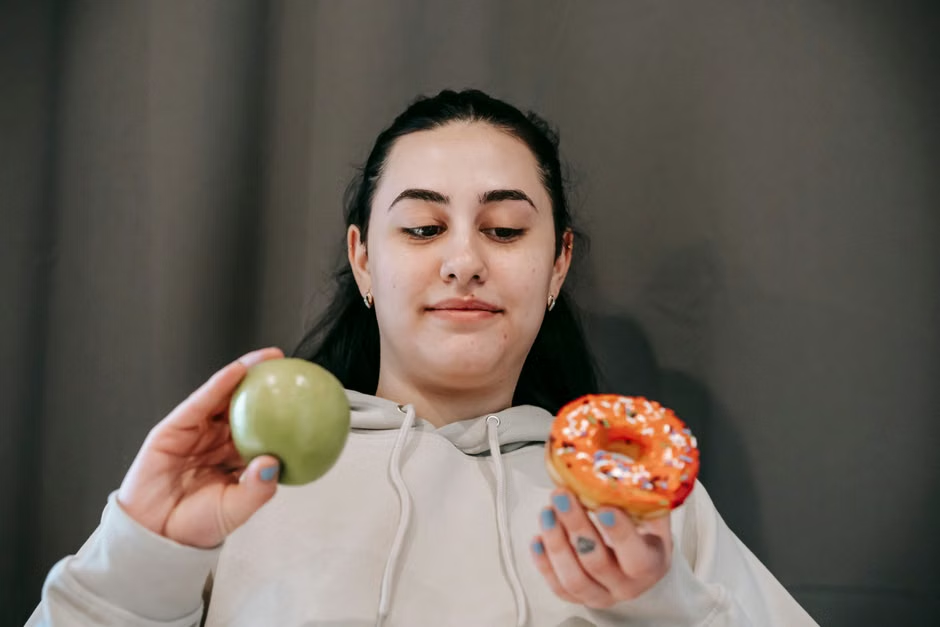
Satiety is the complex physiological and psychological state of feeling satisfied and not wanting to eat more, while calories are simply a measure of energy. A food’s caloric content doesn’t directly dictate its satiating power; rather, factors like its macronutrient composition, fiber content, and even the pace at which it’s eaten profoundly influence how full and content we feel.
Consider two meals with identical caloric counts: one a small, dense pastry, the other a large bowl of lentil soup with vegetables. The pastry might deliver a rapid caloric punch, but its low volume and minimal fiber could leave you feeling physically unsatisfied and craving more soon after. The lentil soup, however, with its high water and fiber content, would fill your stomach, slow digestion, and provide sustained energy release from complex carbohydrates and protein. You’d likely feel full and content for much longer.
This distinction is crucial for anyone trying to cultivate a more conscious relationship with food. Focusing solely on calorie numbers can mislead us, causing us to overlook the qualitative aspects of our eating experience. True satiety involves not just a full stomach, but also a sense of psychological contentment and sustained energy. It’s why, in our practice, we emphasize the “middle way” – finding balance not just in what you eat, but how you eat it, embracing the full experience rather than reductionist measurements.
“The regulation of food intake and energy balance involves a complex interplay of signals from the gastrointestinal tract, adipose tissue, and the central nervous system. Satiety signals are generated at multiple levels, from oral processing to nutrient absorption, demonstrating that fullness is far more nuanced than simple caloric load.”
Is it really just calories in, calories out?
The “calories in, calories out” (CICO) model simplifies energy balance to its most basic equation, suggesting that weight management is purely a matter of consuming fewer calories than you expend. While fundamentally true from a physics perspective, this model often overlooks the complex biological, psychological, and environmental factors that govern appetite, satiety, metabolism, and food choices, making it an incomplete framework for human nutrition.
The human body isn’t a simple calorimeter. Our metabolism adapts, our hormonal systems influence hunger and fat storage, and our psychological state profoundly impacts our eating behaviors. Stress, sleep deprivation, and emotional cues can all override purely physical hunger or satiety signals, leading to eating patterns that defy the simple CICO logic. For example, chronic stress can elevate cortisol, which can influence where fat is stored and how hunger is perceived, regardless of a strict calorie count.
Andrew York, a psychologist and educator specializing in mindful eating, often highlights this complexity, emphasizing that our relationship with food is deeply intertwined with our sense of self and emotional landscape. It’s not just about the numbers; it’s about the conscious experience of eating, the reasons we eat, and how we differentiate hunger from other urges. Understanding this helps us move beyond a purely mechanistic view of our bodies to one that respects our full human experience.
How Do Our Bodies Process Volume and Calories for Fullness?
The intricate dance between volume and calories unfolds through a sophisticated communication network involving our stomach, intestines, hormones, and brain. When we eat, the physical expansion of our stomach sends signals via the vagus nerve to the brainstem and hypothalamus, triggering an initial sense of fullness. This is primarily a volume-dependent response.
Simultaneously, as food begins to digest, nutrients are detected in the small intestine. Proteins and fats, in particular, stimulate the release of gut hormones like cholecystokinin (CCK), peptide YY (PYY), and glucagon-like peptide-1 (GLP-1). These hormones travel through the bloodstream to the brain, enhancing satiety and slowing gastric emptying, which prolongs the feeling of fullness. Different macronutrients have varying effects; protein, for example, is generally considered the most satiating macronutrient, followed by fiber-rich carbohydrates and then fats, though fats contribute significantly to flavor and satisfaction. This interplay means that a meal rich in both volume (from fiber and water) and nutrient density (from protein and healthy fats) will typically lead to the most robust and lasting feeling of satiety.
Beyond these immediate responses, long-term hormonal signals also play a role. Leptin, a hormone released by fat cells, signals energy stores to the brain, influencing overall appetite regulation. Ghrelin, often called the “hunger hormone,” is produced in the stomach and stimulates appetite, usually rising before meals and falling after. The balance of these hormones, alongside conscious awareness, dictates our hunger and fullness cycles. This complex system ensures that while volume can provide immediate cues, caloric content and nutrient composition are essential for sustained energy and satisfaction. This understanding underpins much of our work at Eating the Moment, encouraging individuals to tune into these subtle signals rather than external rules.
“Satiety results from a cascade of pre-absorptive and post-absorptive signals, including stomach distension, nutrient sensing in the gut, and the release of various gastrointestinal hormones. This integrated process ultimately regulates the desire to eat and the size of subsequent meals.”
What to Look For: Signs You’re Misinterpreting Fullness
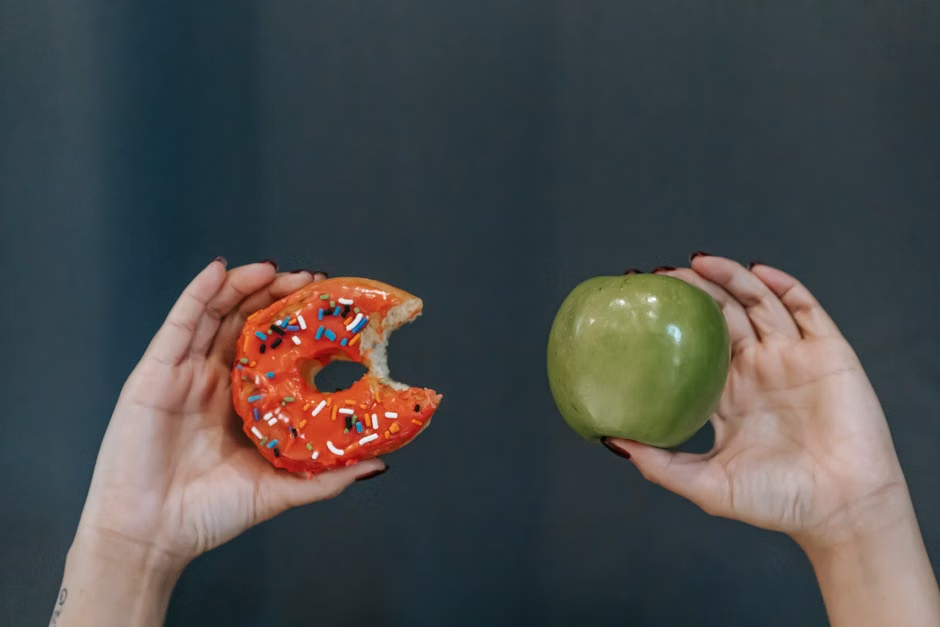
If you find yourself constantly battling cravings, overeating despite feeling physically full, or never quite feeling satisfied, you might be misinterpreting your body’s signals. Learning to differentiate between true physical fullness and other eating cues is a cornerstone of mindful eating. Here are some signs to watch for:
- **Eating Past Physical Fullness:** You feel your stomach is distended, but you continue to eat because the food is still there, it tastes good, or you feel you “should” finish.
- **Rapid Return of Hunger:** You eat a meal, feel full momentarily, but hunger or cravings return quickly, often within an hour or two. This often happens with calorie-dense, low-volume, low-fiber foods.
- **Constant Desire for “More”:** After eating, you don’t feel a sense of completion or satisfaction, leading you to seek additional snacks or desserts, even if not physically hungry.
- **Emotional Eating:** You turn to food for comfort, distraction, or to cope with feelings like stress, boredom, or loneliness, rather than physical hunger. This isn’t about physical fullness at all.
- **Ignoring Subtle Cues:** You tend to eat quickly, not paying attention to the gradual unfolding of satiety signals, only noticing when you’re uncomfortably stuffed.
- **Obsession with Calorie Numbers:** You’re so focused on numerical targets that you disregard your body’s actual sensations of hunger and fullness, leading to dissatisfaction.
Mindful Eating: A Nuanced Approach to Fullness
Our approach at Eating the Moment isn’t about prescribing a diet or specific food rules; it’s about developing an attuned awareness of your internal experiences. It’s a “middle way,” acknowledging the science of hunger and satiety while integrating the profound insights of Buddhist psychology regarding craving, impermanence, and the sense of self. We recognize that while understanding the science of volume and calories is helpful, it’s only one piece of a larger puzzle that includes emotional regulation and habit modification.
This path isn’t a quick fix, nor is it a substitute for medical advice for conditions requiring specific dietary interventions. If you have a diagnosed eating disorder, diabetes requiring strict carbohydrate counting, or specific allergies, a registered dietitian or medical professional can provide tailored guidance. Our work complements these areas by addressing the underlying psychological and behavioral patterns that often drive disordered eating, even in the absence of a formal diagnosis. We provide tools for conscious eating, helping you differentiate between physical need and psychological desire. The goal is to cultivate a relationship with food that is self-compassionate, intuitive, and deeply satisfying, moving beyond the simplistic volume-vs-calorie debate to a holistic understanding of true nourishment.
What to Expect from Cultivating Fullness Awareness
When you start to consciously differentiate between volume and caloric satiety, and tune into your body’s signals, you won’t experience an overnight transformation. This is a journey of gradual awakening, not instant results. You’ll likely begin to notice subtle shifts in your eating patterns and internal experience within a few weeks, with more significant changes unfolding over several months.
Initially, you might become more aware of how certain foods make you feel, both physically and emotionally. You’ll start to recognize the distinct sensation of stomach distension versus the sustained, comfortable feeling of being truly nourished. You may find yourself eating more slowly, savoring your meals, and stopping when you reach a comfortable level of fullness rather than feeling stuffed. The intensity of cravings might diminish as you learn to address the underlying emotional or physical needs more directly, leading to true craving control. This isn’t about forced restriction; it’s about empowerment through conscious choice. Ultimately, you’ll develop a more harmonious and intuitive relationship with food, moving towards a sustainable sense of well-being rather than chasing fleeting diet goals.
Practical Tips for Cultivating Satiety Awareness
Learning to honor your body’s signals for volume and caloric satiety is a practice. It requires patience, curiosity, and a willingness to experiment. Here are some practical steps you can take:
- **Eat Slowly and Mindfully:** Give your body time to register fullness signals. Put your fork down between bites. Pay attention to the flavors, textures, and aromas. This simple act dramatically improves satisfaction.
- **Hydrate Adequately:** Sometimes, thirst can be mistaken for hunger. Drink a glass of water before meals, and stay hydrated throughout the day. We delve deeper into this distinction in our post on Hydration and False Hunger: Distinguishing Thirst From Appetite.
- **Prioritize Fiber and Protein:** Incorporate foods rich in fiber (fruits, vegetables, whole grains, legumes) and protein (lean meats, fish, eggs, tofu, beans) into your meals. These macronutrients contribute significantly to both stomach volume and sustained satiety hormones.
- **Listen to Your Body’s Internal Dialogue:** Before you eat, ask yourself: Am I truly hungry, or am I eating for another reason (boredom, stress, habit)? During your meal, check in with your body: How full do I feel on a scale of 1-10?
- **Differentiate Between Physical and Emotional Hunger:** Emotional hunger often comes on suddenly, feels urgent, and craves specific comfort foods. Physical hunger develops gradually, can be satisfied by a variety of foods, and is accompanied by physical sensations.
- **Practice the “Middle Way”**: Instead of striving for perfection, aim for balance. Some days you might overeat; some days you might undereat. The practice is in returning to awareness, without judgment, each time.
The journey to truly understand fullness, beyond the numbers on a label, is a profoundly personal one. It invites you to step away from external rules and into the richness of your own bodily experience. By tuning into both the physical volume and the nutritional wisdom of your food, you begin to cultivate a conscious eating practice that supports both physical well-being and a deeper sense of self-acceptance. This is the path we explore in Eating the Moment, guiding you to an intuitive relationship with food, one mindful bite at a time.