

You know the feeling. You're standing at the cutting board, knife in hand, and your mind is three tasks ahead: the email you haven't answered, the errand you forgot, the argument you're still replaying. Your hands move, but you're not really there. Dinner gets made. You just don't remember making it.
Food preparation is one of the few daily rituals that asks something of your whole body at once: sight, smell, touch, sound, sometimes even taste before the meal is finished. That makes it an unusually good doorway into mindfulness, if you're willing to walk through it instead of rushing past. Most of us treat cooking as a task to clear rather than an experience to have. We covered the awareness that starts even earlier, at the grocery store, in our piece on mindful grocery shopping, and cooking is really where that same attention gets to finish what it started.
This is the territory the Eating the Moment approach lives in: not another rule about what to eat, but an invitation to notice how you're relating to food while you make it. Presence in the kitchen isn't a garnish on top of good technique. It's a practice in its own right, and it changes what happens later, at the table.
Can Cooking Be a Form of Meditation?
Yes. Cooking can function as a form of meditation when you bring sustained, non-judgmental attention to the sensory experience of preparing food, the same quality of attention used in seated mindfulness practice. The knife, the heat, the smell of onions softening, all become anchors for awareness instead of background noise to something else.
What separates mindful cooking from ordinary cooking isn't the recipe. It's where your attention lives. In seated meditation, the breath is the anchor. In the kitchen, the anchor can be the resistance of a carrot under the blade, the shift in sound as water starts to simmer, the smell that tells you garlic is about to turn from fragrant to bitter. Andrew York, who curates this site and has taught mindfulness-based seminars to psychology postdocs at Duquesne University's Counseling Center, often frames it this way: the kitchen doesn't require you to sit still to practice presence. It asks you to be still inside motion, which for a lot of people is actually the harder and more useful skill.
What Is Mindful Food Preparation?
Mindful food preparation is the practice of engaging fully with the physical and sensory process of cooking, chopping, seasoning, stirring, watching, rather than letting the mind drift to unrelated thoughts or multitasking through the activity. Cleveland Clinic describes mindful eating broadly as paying full attention to the experience of eating, and that same framework extends naturally backward to the preparation that precedes it. If you're not present while you cook, it's much harder to be present while you eat.

In our workshops, we've noticed a pattern: people who describe themselves as "not a cooking person" often mean they've never slowed down enough to notice what cooking actually feels like. The task itself isn't the obstacle. The autopilot is.
How Does Mindful Cooking Actually Work?
Mindfulness works, in part, by shifting attention away from rumination and toward direct sensory input, which quiets the mental loop of planning, worrying, and narrating that otherwise runs in the background. Research summarized by Harvard Health Publishing links sustained mindfulness practice to measurable reductions in stress and anxiety, largely because attention anchored in the present moment leaves less room for the mind to spin forward or backward. Cooking, done with intention, borrows that same mechanism. Your prefrontal cortex, the part of the brain responsible for planning and self-narration, gets a break when your attention is fully occupied by the texture of dough under your palms or the color change in a pan of sautéing peppers.
"Mindfulness meditation may ease anxiety, mental stress... it appears to change the brain regions associated with memory, self-awareness, and the regulation of emotion."
This is not a claim that chopping vegetables will rewire your brain overnight. It's a claim that the same attentional muscle gets exercised, meal after meal, in a setting most of us already visit daily. That's what makes the kitchen such an efficient place to practice.
What Is the Culinary Term for Prepping?
The culinary term for prepping is "mise en place," a French phrase meaning "everything in its place." It refers to the practice of gathering, washing, and arranging all ingredients and tools before cooking begins, so the actual cooking can happen with full attention rather than scrambling.
There's something quietly Buddhist about mise en place, even though the term itself has no religious origin. It resembles the intentionality of oryoki, the formal Zen practice of eating in which bowls are unwrapped, arranged, and used in a fixed, deliberate sequence. Both traditions treat the setup as part of the practice, not a chore that precedes it. When you slow down to arrange your ingredients before you start cooking, you're not just being efficient. You're drawing a boundary around the next twenty minutes and telling your nervous system: this is what we're doing now.
What to notice while you prep:
- The temperature and texture of each ingredient as you handle it
- The specific sound each vegetable makes under the knife
- Any urge to rush, and where in your body that urge shows up
- Smells that shift as ingredients are cut, crushed, or heated
- The weight and grip of your tools in your hand
- Whether your breathing has sped up or gone shallow
- Thoughts that pull you out of the task, without judging them
What Is the Mantra for Cooking?
There's no single official mantra for cooking, but a simple, repeatable phrase like "one task, one moment" or "hands here, mind here" works well as an anchor. The point of a cooking mantra isn't the words themselves. It's using a short phrase to pull attention back whenever it drifts, the same function a mantra serves in seated meditation.
Pick something short enough to say silently between cuts. Some people borrow from the Middle Way, the Buddhist principle of steering between extremes, and use a phrase like "not rushed, not stalled" to describe the pace they're aiming for. Others just use "this onion," repeated as a way of returning to the one thing actually in front of them. In sum: the mantra matters less than the habit of noticing when you've left the room mentally, and gently walking back in.
What Are 5 Methods of Food Preparation You Can Practice With Presence?
The five core methods of food preparation, washing, cutting, mixing, heating, and plating, each offer a different kind of sensory anchor. Washing engages touch and temperature. Cutting engages sound and resistance. Mixing engages rhythm. Heating engages smell and visual change. Plating engages spatial attention and, often, a sense of completion.
- Washing and rinsing — notice water temperature, the weight of produce in your hands, and the shift from dusty to clean
- Cutting and chopping — track the sound, the resistance of each vegetable, and the evenness of your rhythm
- Mixing and kneading — feel texture change under your hands, whether that's dough tightening or a sauce coming together
- Heating and simmering — watch color, listen for the shift from silence to bubbling, and track smell as it develops
- Plating and serving — slow down at the very end, and notice the impulse to rush past this step entirely
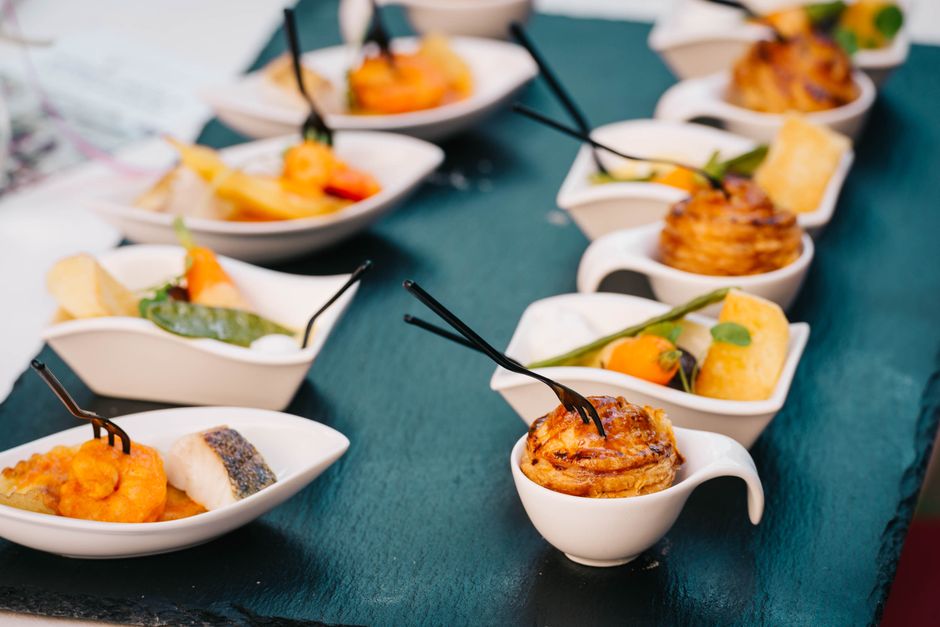
Plating gets skipped over more than any other step, probably because by that point you're hungry and the food is finally ready. But it's worth pausing here for even ten seconds. How you arrange food on a plate is often the first place your relationship to that meal becomes visible to you.
When Kitchen Meditation Isn't the Right Fit
Cooking with presence is not a requirement, and treating it as one defeats the point. If you grabbed dinner from a drive-through, or picked something up on the way home from Giant Food, Food 4 Less, or Food City because the day ran long, that doesn't disqualify you from mindful eating. You can still unwrap fast food slowly, notice the smell before the first bite, and eat it without a screen in front of you. The mindfulness lives in the attention, not in whether you made the meal from raw ingredients.
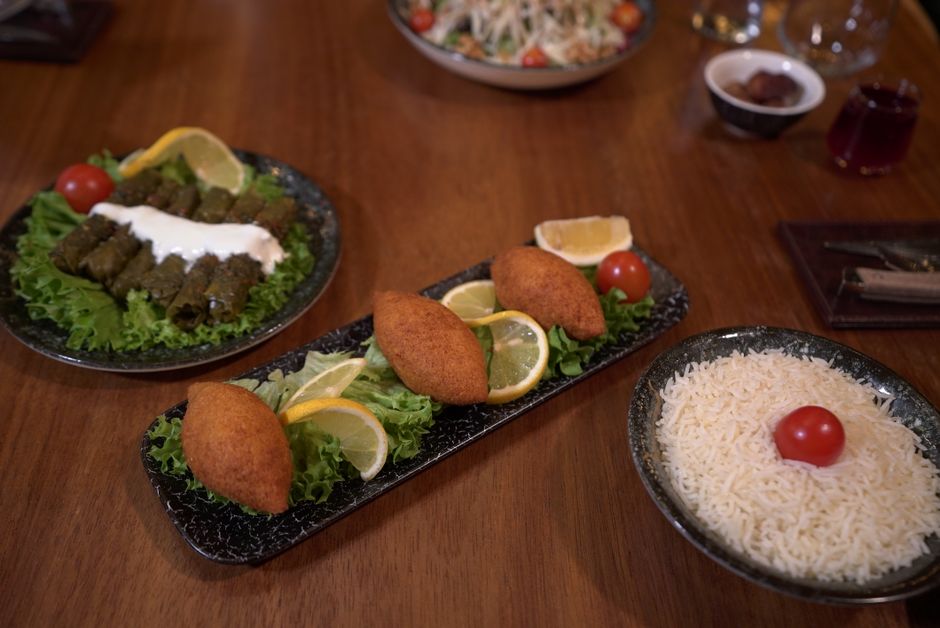
There are also cultures where ritualized food preparation is already built into daily life in ways a Western reader might not immediately recognize as "meditation." Home cooking traditions around food in India often involve grinding spices fresh and cooking in stages that naturally slow the process down. Indian food and Mediterranean food traditions, in particular, tend to treat shared preparation, rolling dough, grinding spice pastes, assembling mezze, as a communal and unhurried act rather than a solo chore to finish quickly. If your family already cooks this way, you may already be doing more mindful preparation than you realize.
One caveat worth naming directly: if you have a history of disordered eating, intense focus on food preparation can sometimes tip into control or anxiety rather than presence. If that's your history, a gentler starting point, like the attention practices we describe in our guide to breakfast awareness, may be a safer place to build the skill before bringing it into a more involved cooking session.
"Mindfulness is the basic human ability to be fully present, aware of where we are and what we're doing, and not overly reactive or overwhelmed by what's going on around us."
— National Center for Complementary and Integrative Health, NIH
What to Expect From a Kitchen Meditation Practice
Don't expect transformation on night one. The first few times you try to cook with presence, you'll probably notice how often your attention wanders, which can feel discouraging if you mistake noticing for failing. It isn't. Noticing is the practice.
A realistic timeline looks something like this: in the first week or two, you'll catch yourself drifting constantly, and that's normal. By three or four weeks of occasional practice, sensory details start to register without effort, the smell of garlic browning, the exact moment rice goes from opaque to translucent. Somewhere around two or three months in, many people report a subtler shift: less urgency around food generally, and a little more curiosity about their own habits at the table. That shift tends to carry into how you eat, not just how you cook.
Practical Tips for Cooking With Presence
- Start with one dish per week, not every meal, so the practice doesn't feel like another obligation
- Put your phone in another room during prep, even for fifteen minutes
- Choose one sense to focus on each time, smell one day, sound the next
- Let mise en place be part of the practice, not a step you rush to get through
- Notice, without judgment, the exact moment your mind leaves the kitchen
- Pause before plating, even briefly, before moving straight to the table
None of this requires new equipment or a more elaborate recipe. It requires slowing down by a few minutes and treating those minutes as the point, not the obstacle between you and dinner. That's really the whole shift: experience the chopping, the stirring, the smell, first, and only afterward, if you're inclined, describe or think about what you just did.
If this way of relating to food resonates, it's worth exploring further than a single meal. The broader approach behind Eating the Moment extends this same quality of attention from the cutting board all the way to the fork, and most people find that once presence takes root in one part of the process, it tends to spread into the rest.